

Published: May 2026

Introduction
Inventory management is one of the most underestimated challenges in ecommerce. When you’re starting out a spreadsheet works fine. Then you add a second sales channel. Then a third warehouse location. Then a supplier who needs purchase orders in a specific format. Then your accountant asks why the numbers don’t match.
That’s the moment most ecommerce operators start looking for a proper inventory management system.
Cin7 is one of the most capable platforms in that space. Here’s an honest look at what it does, who it’s built for, and whether it’s the right fit for your business.
What Is Cin7?
Cin7 is a cloud-based inventory and order management platform built for product businesses that sell across multiple channels and locations. It connects your sales channels, warehouses, suppliers, and accounting software into a single system — giving you real time visibility across your entire operation.
Originally built for mid-market product businesses, Cin7 has expanded to serve ecommerce operators of all sizes who have outgrown basic inventory tools and need something more robust.
The platform comes in two main versions:
- Cin7 Core — designed for growing small to mid-size businesses
- Cin7 Omni — built for larger, more complex operations with advanced 3PL and EDI requirements
Key Features
Inventory management Real time stock tracking across multiple locations, warehouses, and sales channels. Know exactly what you have, where it is, and what’s committed to open orders at any moment. Automatic reorder points and purchase order generation when stock hits defined thresholds.
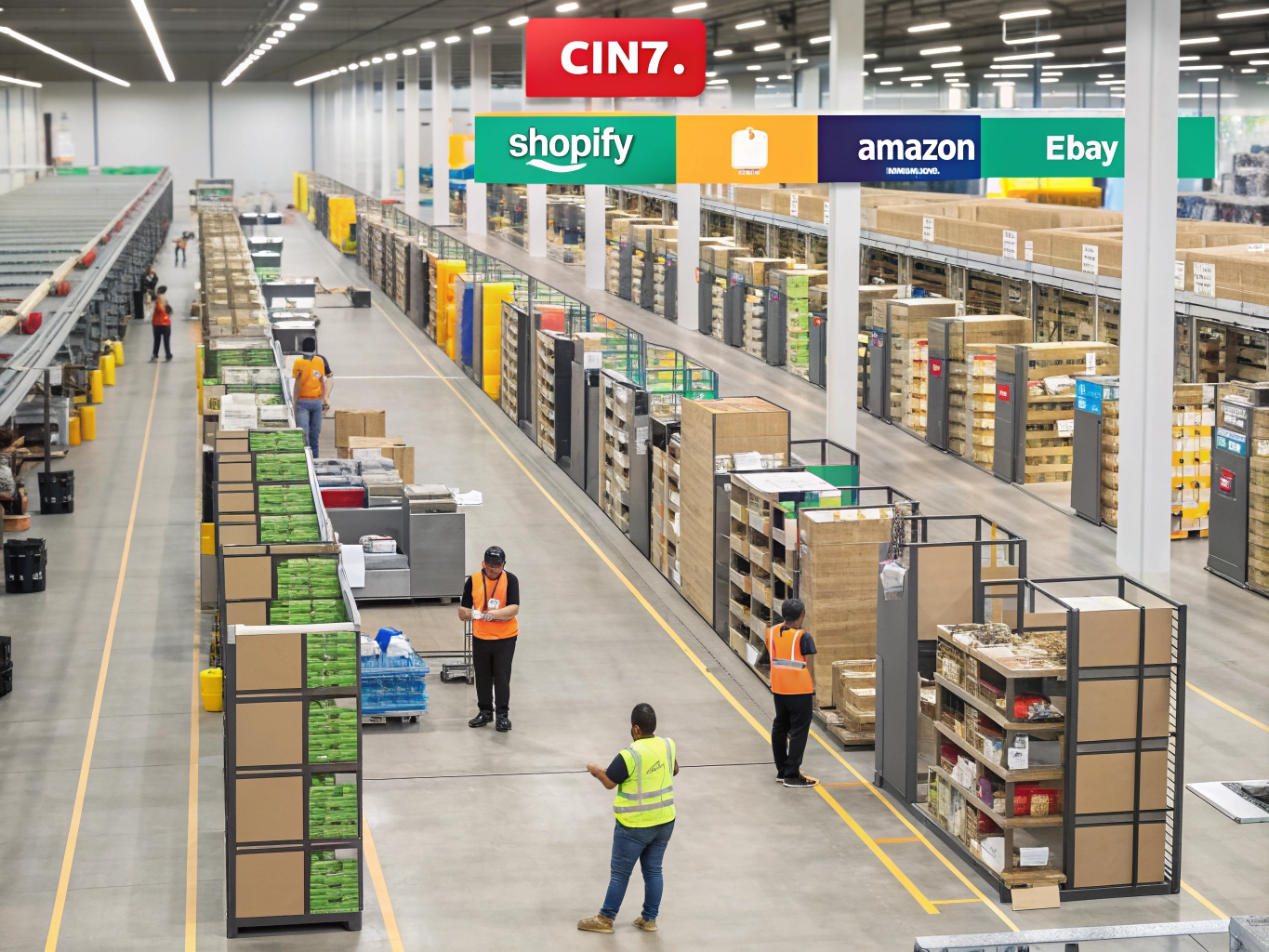
Multi-channel sales Cin7 connects to Shopify, Amazon, eBay, WooCommerce, and other sales channels — syncing orders and inventory automatically across all of them. Sell everywhere, manage everything in one place.
Purchase order management Create, send, and track purchase orders to suppliers directly from Cin7. Receive stock against POs, track partial deliveries, and reconcile supplier invoices against what was actually received.
Warehouse management Pick, pack, and ship workflows built into the platform. Barcode scanning, bin locations, and fulfilment workflows for businesses managing their own warehouse operations.
3PL integration For businesses using third party logistics providers Cin7 Omni has built-in EDI and 3PL connectivity — automating the data exchange between your system and your fulfilment partner.
Accounting integration Native integrations with Xero and QuickBooks Online sync sales, purchases, and inventory movements automatically. Eliminating the manual data entry that causes reconciliation headaches.
Reporting and analytics Inventory valuation, stock movement history, sales performance by channel, supplier performance, and margin analysis — all built into the platform without needing a separate reporting tool.
B2B portal Cin7 includes a built-in B2B ordering portal for wholesale customers — allowing trade buyers to place orders directly without phone calls or emails.
How We Use It in Our Own Business
We run our ecommerce store on Shopify and use Cin7 to manage inventory across multiple supplier relationships. The Shopify integration means every order placed on our storefront automatically updates our inventory in Cin7 — no manual stock adjustments, no overselling, no reconciliation at the end of the day.
The purchase order workflow changed how we manage supplier relationships. When stock hits reorder point Cin7 generates a draft PO automatically. We review, approve, and send — the whole process takes minutes instead of the manual back and forth that used to consume hours each week.
The Xero integration means every purchase and sale flows into our accounting system without manual data entry. Month end reconciliation went from a painful exercise to a straightforward review.
Who Is Cin7 Built For?
Cin7 is the right fit if you are:
- Selling across multiple channels (Shopify plus Amazon, eBay, or wholesale)
- Managing inventory across more than one location or warehouse
- Working with multiple suppliers and need proper PO management
- Running a product business with more than a few hundred SKUs
- Ready to move beyond spreadsheets and basic inventory tools
- Integrating with Xero or QuickBooks and want automated sync
It may be more than you need if you are:
- Just starting out with a single Shopify store and simple inventory
- Selling fewer than 50 SKUs with a single supplier
- Not yet at the volume where manual processes are causing real problems
Cin7 vs Competitors
Cin7 vs DEAR Inventory (now Cin7 Core) DEAR Inventory was acquired by Cin7 and rebranded as Cin7 Core. If you were a DEAR user you’re already in the Cin7 ecosystem.
Cin7 vs Unleashed Both are strong mid-market inventory platforms. Cin7 has broader channel integrations and a more developed B2B portal. Unleashed is often considered simpler to implement for straightforward use cases.
Cin7 vs TradeGecko (now QuickBooks Commerce) TradeGecko was acquired by Intuit and folded into QuickBooks Commerce. If you’re a QuickBooks user that integration is seamless. Cin7 is the stronger choice for Xero users and multi-channel operators.
Cin7 vs Shopify’s native inventory Shopify’s built-in inventory management works well for simple operations. Once you’re managing multiple locations, complex supplier relationships, and multi-channel sales, Cin7 provides the depth Shopify’s native tools don’t.
Pricing
Cin7 pricing is subscription based and scales with the size and complexity of your operation. Plans start at approximately $349 USD per month for Cin7 Core, making it a meaningful investment that suits businesses at a stage where the efficiency gains justify the cost.
A free trial is available — worth taking before committing to evaluate whether the platform fits your specific workflows.
Implementation — What to Expect
Cin7 is a powerful platform and implementation requires proper planning. Expect:
- 2-6 weeks for a standard implementation depending on complexity
- Data migration — product catalogue, opening stock, supplier details
- Integration setup — connecting Shopify, Xero, and other platforms
- Workflow configuration — setting up locations, reorder points, PO templates
- Staff training — the platform has depth and your team needs to understand it
Many businesses use a Cin7 implementation partner or an Upwork specialist to manage the setup. Getting implementation right from the start saves significant time and frustration later.
What to Watch Out For
- Pricing — Cin7 is a meaningful monthly investment. Make sure your business volume justifies it before committing.
- Implementation complexity — don’t underestimate the setup time. Plan properly and consider professional implementation support.
- Feature depth — the platform has a lot of capability. Focus on the features you actually need rather than trying to use everything at once.
- Support — like many SaaS platforms support quality can vary. Document your workflows and build internal knowledge so you’re not dependent on support for routine questions.
The Bottom Line
Cin7 is one of the most capable inventory management platforms available for ecommerce operators who have outgrown basic tools. For businesses selling across multiple channels, managing complex supplier relationships, and needing reliable accounting integration, it provides the depth and connectivity that serious product businesses require.
The investment in both cost and implementation time is real — but for the right business at the right stage, Cin7 eliminates the inventory chaos that limits growth and consumes hours of manual work every week.
Explore Cin7 here
Affiliate Disclosure: This article contains affiliate links to productivity tools and services. If you purchase through these links, we may earn a commission at no additional cost to you. We only recommend tools we genuinely believe will help solopreneurs manage time effectively and maximize productivity.