

The World’s Largest Online Marketplace
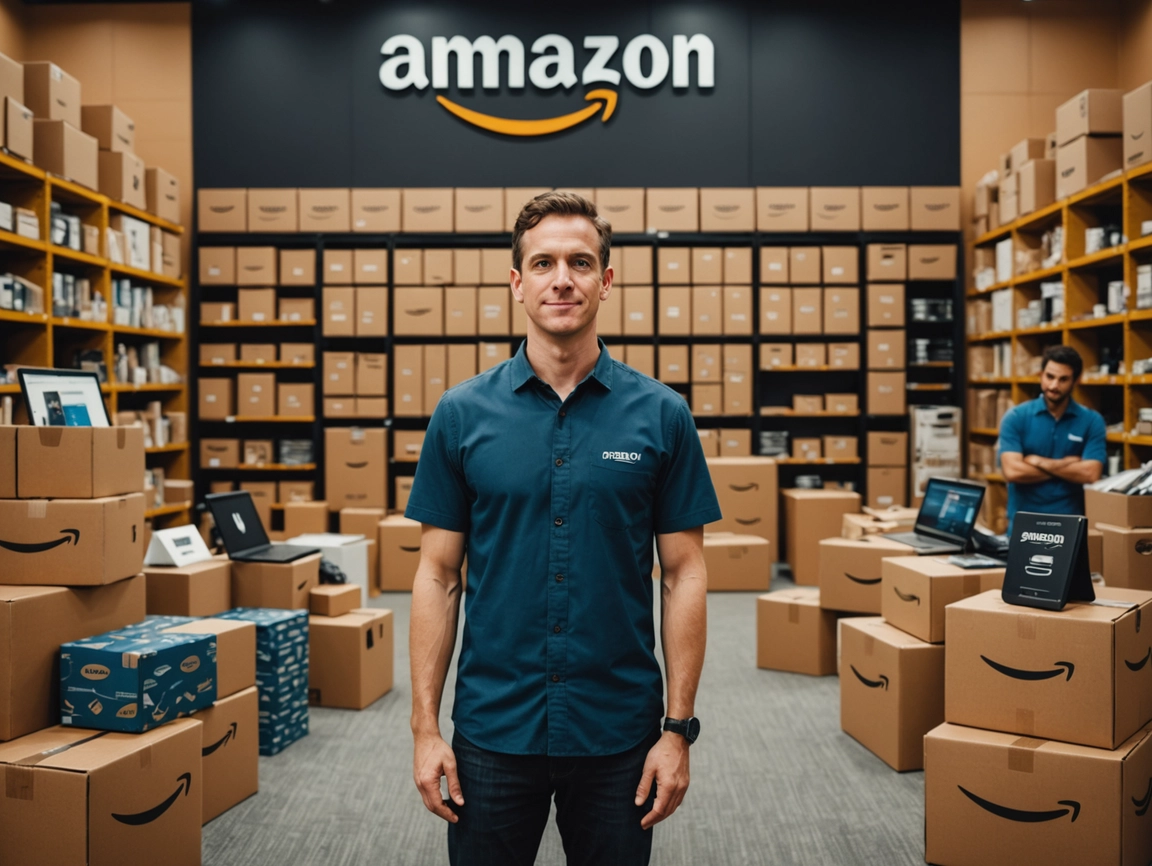
When starting an ecommerce business, one of the biggest decisions you’ll face is where to sell your products. While building your own online store offers complete control, Amazon provides an alternative path that’s particularly attractive for new entrepreneurs. With over 300 million active customers, built-in trust, and powerful fulfilment infrastructure, Amazon offers advantages that can accelerate your path to profitability. While it’s not without challenges and costs, Amazon remains one of the most accessible and potentially lucrative platforms for launching an ecommerce business. Let’s explore why Amazon might be the perfect starting point for your entrepreneurial journey.

The Advantages of Starting on Amazon
Massive Built-In Customer Base
Amazon’s greatest advantage is simple: customers are already there, actively searching for products to buy.
The numbers:
- 300+ million active customer accounts worldwide
- 200+ million Prime members globally
- 2.5+ billion visits per month
- Customers with credit cards already on file, ready to buy
Unlike building your own store where you must drive every visitor through marketing, Amazon provides instant access to millions of shoppers with high purchase intent. They’re not browsing—they’re searching for specific products to buy right now.
Established Trust and Credibility
New ecommerce stores face a significant trust barrier. Customers hesitate to enter credit card information on unfamiliar websites. Amazon eliminates this friction:
- Customers trust the Amazon brand and buying process
- A-to-Z Guarantee protects buyers, reducing purchase anxiety
- Familiar checkout process removes hesitation
- Established return and refund policies provide confidence
This built-in trust means higher conversion rates—customers who find your product are more likely to buy than on an unknown website.
Fulfillment by Amazon (FBA)
FBA is arguably Amazon’s most powerful feature for new sellers:
How it works:
- Send your inventory to Amazon’s warehouses
- Amazon stores, picks, packs, and ships orders
- Amazon handles customer service and returns
- You focus on sourcing products and growing sales
Benefits:
- Prime eligibility—your products get the Prime badge, dramatically increasing visibility and sales
- No need for warehouse space or packing materials
- Professional fulfilment without hiring staff
- Fast, reliable shipping builds customer satisfaction
- Scalable—handle 10 orders or 10,000 with the same effort
FBA transforms logistics from a complex operational challenge into a simple monthly fee, allowing you to start selling without fulfillment infrastructure.
Lower Barrier to Entry
Starting on Amazon requires minimal upfront investment compared to building your own store:
Cost comparison:
Amazon:
- Individual plan: $0.99 per sale (no monthly fee)
- Professional plan: $39.99/month
- Referral fees: 8-15% per sale (category dependent)
- FBA fees: Variable based on size/weight
- Initial inventory: $500-$2,000 to start
- Total to launch: $500-$2,500
Own ecommerce store:
- Platform subscription: $29-$299/month
- Domain: $10-15/year
- Theme: $0-$300
- Apps: $50-$200/month
- Marketing to drive traffic: $500-$5,000+/month
- Initial inventory: $500-$2,000
- Total to launch: $1,500-$10,000+
Amazon’s lower entry cost and built-in traffic make it more accessible for bootstrapped entrepreneurs.
Powerful Search and Discovery
Amazon’s search algorithm actively helps customers find your products:
- Customers search with buying intent—they’re looking for products to purchase
- Optimized listings appear in relevant searches
- “Customers also bought” recommendations drive additional sales
- Sponsored Products ads let you boost visibility affordably
- Best Seller badges and rankings provide social proof
On your own store, you must drive every visitor through SEO, ads, or social media. On Amazon, the platform actively connects buyers with sellers.
Simplified Payment Processing
Amazon handles all payment processing:
- No need to set up merchant accounts or payment gateways
- Amazon manages fraud prevention and chargebacks
- Customers use saved payment methods
- You receive payouts every two weeks
- No PCI compliance requirements to manage
International Expansion Made Easy
Amazon operates marketplaces in 20+ countries:
- Expand to international markets without building separate stores
- Amazon handles currency conversion and international payments
- FBA can handle international fulfillment
- Access global customers with minimal additional effort
Data and Analytics
Amazon provides robust seller analytics:
- Sales reports and trends
- Traffic and conversion data
- Inventory performance metrics
- Customer search terms
- Advertising performance
This data helps you make informed decisions about inventory, pricing, and product selection.
Learn Ecommerce Fundamentals
Amazon is an excellent training ground for ecommerce:
- Learn product research and selection
- Understand pricing and profitability
- Master inventory management
- Develop customer service skills
- Gain experience with advertising and marketing
Skills learned on Amazon transfer to any ecommerce platform, making it valuable education even if you eventually build your own store.
The Challenges of Selling on Amazon
Amazon offers significant advantages, but it’s important to understand the challenges:
Fees Reduce Margins
Amazon’s convenience comes at a cost:
- Referral fees: 8-15% of sale price (varies by category)
- FBA fees: $3-$8+ per unit depending on size and weight
- Storage fees: Monthly fees for inventory in Amazon warehouses
- Long-term storage fees: Additional charges for slow-moving inventory
- Advertising costs: Often necessary to compete effectively
Total fees can consume 30-40% of your sale price, requiring careful product selection and pricing to maintain profitability.
Intense Competition
Amazon’s low barrier to entry means high competition:
- Millions of sellers competing for visibility
- Price competition can erode margins
- Established sellers have advantages (reviews, rankings)
- Private label competition in popular categories
Success requires differentiation, excellent product selection, and strong execution.
Limited Brand Building
On Amazon, you’re building Amazon’s brand more than your own:
- Customers remember buying from Amazon, not your brand
- Limited ability to customize your storefront
- Difficult to build direct customer relationships
- Can’t collect customer emails for marketing
- Amazon owns the customer relationship
This makes it harder to build long-term brand equity and customer loyalty.
Platform Dependency and Risk
Relying on Amazon creates vulnerability:
- Amazon can change policies, fees, or algorithms
- Account suspensions can halt your business overnight
- You don’t control the platform or customer experience
- Amazon may compete with successful products through private label
Strict Rules and Policies
Amazon enforces strict seller requirements:
- Performance metrics you must maintain
- Restricted categories requiring approval
- Detailed product listing requirements
- Potential for account suspension for violations
Customer Service Expectations
Amazon customers expect Amazon-level service:
- Fast shipping (Prime sets expectations)
- Easy returns and refunds
- Quick response to inquiries
- High-quality products and accurate descriptions
Failing to meet these expectations results in negative reviews and potential account issues.
Who Should Start on Amazon?
Amazon Is Great For:
New entrepreneurs with limited capital: Lower startup costs and no need to drive traffic make Amazon accessible for bootstrapped businesses.
Product-focused sellers: If you have great products but limited marketing skills, Amazon’s built-in traffic is invaluable.
Those testing product ideas: Amazon provides fast feedback on product viability without building a full store.
Sellers wanting to avoid logistics: FBA eliminates fulfillment complexity, perfect if you want to focus on product sourcing.
People seeking quick validation: Get products in front of buyers within weeks, not months.
International sellers: Access global markets without building separate infrastructure.
Consider Alternatives If:
You’re building a unique brand: If brand identity and customer relationships are central to your strategy, your own store provides more control.
You have high-margin products: Amazon’s fees hurt less with higher margins, but very high-margin products might justify the investment in your own store.
You want to own customer data: Building an email list and customer database requires your own platform.
You’re selling custom or made-to-order products: Amazon’s fulfilment model works best for standardised inventory.
You have strong marketing skills: If you can drive traffic effectively, your own store captures more profit per sale.
The Hybrid Approach: Amazon + Your Own Store
Many successful sellers use both channels strategically:
Start on Amazon
- Launch products on Amazon first
- Validate demand and refine offerings
- Generate revenue and cash flow
- Learn ecommerce fundamentals
- Build product reviews and social proof
Expand to Your Own Store
- Once products are proven, launch your own website
- Use Amazon sales to fund store development
- Build brand and customer relationships
- Capture higher margins on direct sales
- Reduce platform dependency
Maintain Both Channels
- Amazon for volume and discovery
- Your store for brand building and margins
- Diversified revenue reduces risk
- Each channel supports the other
This approach combines Amazon’s advantages with the long-term benefits of owning your platform.
Getting Started on Amazon
Step 1: Choose Your Selling Plan
Individual: $0.99 per sale, good for under 40 sales/month
Professional: $39.99/month, necessary for serious sellers
Start with Individual if testing, upgrade to Professional when committed.
Step 2: Research Products
- Find products with demand but manageable competition
- Use tools like Jungle Scout or Helium 10
- Look for products with 300+ monthly sales and under 100 reviews
- Ensure profit margins of 30%+ after all fees
Step 3: Source Products
- Wholesale from established brands
- Private label from manufacturers (Alibaba, etc.)
- Retail arbitrage (buy low, sell higher)
- Handmade products (if you create them)
Step 4: Create Optimized Listings
- Keyword-rich titles
- High-quality product images (7+ images)
- Detailed bullet points highlighting benefits
- Comprehensive product descriptions
- Backend search terms
Step 5: Choose Fulfillment Method
FBA (recommended): Amazon handles everything, Prime eligibility
FBM (Fulfilled by Merchant): You handle fulfilment, lower fees but more work
Step 6: Launch and Optimise
- Start with competitive pricing
- Use Amazon PPC advertising to gain visibility
- Encourage early reviews (within Amazon’s terms)
- Monitor performance and adjust
- Continuously optimize listings based on data
Keys to Amazon Success
Product Selection Is Everything
Choose products with proven demand, manageable competition, and healthy profit margins. This decision determines 80% of your success.
Optimize for Amazon’s Algorithm
Understand how Amazon’s A9 algorithm works and optimize listings for both search and conversion.
Maintain Excellent Metrics
Keep order defect rate low, shipping fast, and customer satisfaction high to maintain good standing.
Invest in Quality Images
Professional product photography dramatically impacts conversion rates on Amazon.
Manage Inventory Carefully
Stockouts kill momentum and rankings. Overstocking incurs storage fees. Find the balance.
Provide Exceptional Customer Service
Quick responses, easy returns, and problem resolution build positive reviews and protect your account.
Continuously Test and Improve
Amazon rewards optimization. Continuously test pricing, images, copy, and advertising to improve performance.
The Bottom Line
Amazon is an excellent marketplace to start your ecommerce journey, particularly if you’re new to online selling, have limited capital, or want to validate products quickly. The combination of massive built-in traffic, established trust, powerful fulfilment infrastructure, and relatively low startup costs makes Amazon uniquely accessible for new entrepreneurs.
While fees reduce margins and competition is intense, the ability to reach millions of ready-to-buy customers without building traffic from scratch provides a significant advantage. FBA eliminates fulfilment complexity, allowing you to focus on product selection and growth rather than logistics.
The smartest approach for many sellers is starting on Amazon to validate products and generate revenue, then expanding to your own store to build brand equity and capture higher margins. This hybrid strategy combines Amazon’s volume and discovery advantages with the long-term benefits of owning your customer relationships and platform.
Amazon isn’t perfect, and it’s not the right choice for every business. But for entrepreneurs seeking the fastest path to ecommerce profitability with minimal upfront investment, Amazon remains one of the most powerful platforms available. Start smart, choose products carefully, optimise relentlessly, and Amazon can be the launchpad for a thriving ecommerce business.
Affiliate Disclosure: This article contains affiliate links to subscription platforms and tools. If you purchase through these links, we may earn a commission at no additional cost to you. We only recommend solutions we genuinely believe will help you build successful subscription businesses.